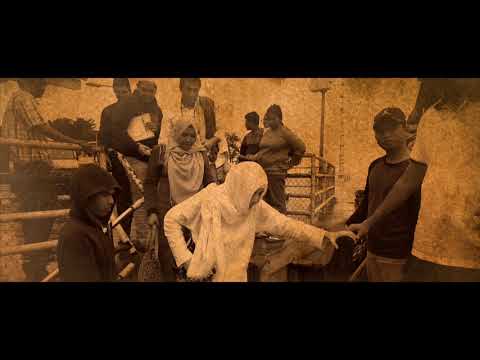
The Singapore and Malaysia sufi students organizing retreats at Pulau Besar, Malacca, in Malaysia every year. Our beloved Spiritual Sufi Teacher, Shaykh Hamid Hassan leads the retreat. We are publishing our memories and students experiences here.
Good day to you. Trust with these few lines will find you in the best of spirit with the grace of Allah and safely back home with your loved ones.
I was very much looking forward to this retreat. I was worried that I wouldn't be able to make it due to my work assignment in Kolkata, India. I wrote to Shaykh and with his advice I completed my task and flew back on 30 March, just nice to pack up for the re treat.
It was indeed very warming to see our family from Malaysia once again and equally great to see an international team from other parts of the world, new faces and adding up to one big family.
The island Pulau Besar (PB) is very calming, serene away from the all the hustle and bustle of the city. From sun rise to sun set is full of beauty in the green, sand and sea. Such is the elegance of PB that one need to be there to experience. I pray that PB will be in its natural being welcoming the yeaning hearts for the yearly retreats to mend our ways through the Mujaddidi practices. May Almighty gives us the strength to carry on and with the guidance from our Shaykh, we will achieve the blissfulness within.
The 4 days gone so quickly and each passing second was so energizing with the presence of Shaykh. The meditation sessions in the group were so immense and very welcoming to the heart.
Thank U, Bros Haji Siddique, Chris, Idris, Abdul Haadi, Syed Masood and Sis Citi for sharing your experience with us. You sum up very well our thoughts and the reasons why we choose this path.
A BIG thank U to Sis Citi, Ju and Bros Abu Bakar, Hamid, Mutafiz for coordinating and organizing a once again a successful retreat.
Another thank U to Bros Gani and Mustafiz for capturing all the wonderful moments in camera.
Last but not least my sincere gratitude to our Shaykh for being there for us. Such a humble man with a heavy responsibility to steer each and every one of us to the right direction. You held our hands never letting them go. You are our guide and our teacher showing us the way of this beautiful path.
From: "Shaik Maideen" <maideenshaik@yahoo.com.sg>
Date: 31 May 2013 11:01
Subject: Re: P BESAR RETREAT: MY EXPERIENCE
To all my brother n sisters, for me it was a wonderful time at the retreat. To me God is love n love is god that's wat I saw in every one's eyes. The vibration from each n every one MASHA ALLAH could feel their love their courtesy their language their caring. As we approach Allah , get nearer to him he will manifest on with his love. Every thing we see n feel will b of love. The plants the trees the flowers the animals will emit the vibration of love. We cry more n laugh less. This wat I saw in my grand Shaikh. His smile has so many meanings as he see thru us. My heartiest thanks to my loving sisters from KL n also to my beloved sisters
From Singapore n also to my brothers I m not clean enough to advice anybody I can only beg pls continue the mediation (Muragaba ). May the blessing of our prophet SWA be showered on all of us. May he shower his Elmo secret knowledge to all our hearts.may our wonderful Shaikh shower his blessing n love ( which he has in abundunts ) on all of us
This article is dedicated to those who are interested to know about entire 5 times prayer system. Muslims use the human
voice to announce the times of prayer to the community. The adhanis the call to prayer itself, and the person who calls it is called themuadhan. Instead of using the bell,
drum or gong, the Muslims use the human voice to announce the point of entry of
the prayer period. This prayer call, calledadzan,
is made in Arabic throughout the world as taught by Prophet Muhammad.
God says, “O you who believe! When the
call is made for prayer… hasten to the remembrance of God.” (62:9)
The following is
the Arabic transliteration and the English translation of what you hear:
Allahu Akbar
God is Great
(said four times)
Ashhadu an la ilaha
illa Allah
I bear witness that there is no god except the One God.
(said two times)
Ashadu anna
Muhammadan Rasool Allah
I bear witness that Muhammad is the messenger of God.
(said two times)
Hayya 'ala-s-Salah
Hurry to the prayer (Rise up for prayer)
(said two times)
Hayya 'ala-l-Falah
Hurry to success (Rise up for Salvation)
(said two times)
Allahu Akbar
God is Great
[said two times]
La ilaha illa Allah
There is no god except the One God
For the
pre-dawn (fajr) prayer, the following phrase is inserted after
the fifth part above, towards the end:
As-salatu Khayrun
Minan-nawm
Prayer is better than sleep
(said two times)
SIGNIFICANCE
OF AZAAN
Let us begin with Indonesia right on the
eastern side of the earth's central land mass. Indonesia consists of numerous
small islands, the principle ones amongst them being Java, Sumatra, Borneo and
Saibil, all of which are well known. It is the largest Muslim country in the
world, with 180 million inhabitants. The number of non-Muslims here is
negligible.
As soon as dawn breaks on the eastern side of
Saibil, at approximately 5:30 am local time, Fajr Azaan begins. Thousands of
Muazzins in eastern Indonesia commence proclaiming the Oneness of the Almighty,
Omnipotent and Omniscient Allah and the universal apostleship of Prophet
Muhammad (Sall Allaho alaihe wasallam).
The process then continues and advances
towards the Western Islands of Indonesia. The time difference between the
eastern and western islands of Indonesia is one and a half hours. So, one and a
half hours after the Azaan has been completed in Saibil, it echoes in Jakarta
on Java Island. Sumatra then follows suit.
Before this auspicious process of calling
Azaan ends in Indonesia, it has already begun in Malaysia. Burma is next in
line, and within an hour of its commencement in Jakarta, it reaches Dhaka, the
capital city of Bangladesh. No sooner the calling of Azaan ends in Bangladesh,
it has already prevailed in western India, from Calcutta to Srinagar. It then
advances towards Bombay and the environment of entire India resounds with this
august proclamation.
Srinagar and Sialkot (a city in north
Pakistan) have the same timing for Azaan. The time difference between Sialkot,
Kota, Karachi and Gowadar (a city in Balochistan, Pakistan) is forty minutes,
and within this time, Fajr Azaan is heard throughout Pakistan. Before it ends
there, however, it has already begun in Afghanistan and Muscat.
The time difference between Muscat and Baghdad
is one hour. Azaan resounds during this one hour in the environments of
Hijaaz-e-Muqaddas (holy cities of Makkah and Madinah), Yemen, United Arab
Emirates, Kuwait and Iraq.
The time difference between Baghdad and Alexandria
in Egypt is again one hour. Azaan continues to resound in Syria, Egypt, Somalia
and Sudan during this hour. Alexandria and Istanbul are situated on the same
geographical longitude. The time difference between eastern and western Turkey
is one and a half hours, and during this time, it is echoed with the call to
prayer.
Alexandria and Tripoli (capital of Libya) are
located at an hour difference from one another. The process of
calling Azaan thus continues throughout the whole of Africa. Therefore, the
proclamation of the Oneness of Allah and the universal prophethood of Muhammad
(Sall Allaho alaihe wasallam) that had begun in the eastern islands of
Indonesia, reaches the Eastern Shore of the Atlantic Ocean after nine and a
half hours.
Prior to the Azaan reaching the shores of the
Atlantic, the process of Zohr Azaan has already commenced in eastern Indonesia,
and before it reaches Dhaka, Asr Azaan has started. This has hardly reached
Jakarta one and half hours later. Then the time of Maghrib becomes due, and no
sooner has Maghrib time reached Sumatra, then the time for calling Isha Azaan
has commenced in Saibil!
When the Muazzins of Indonesia are calling out
Fajr Azaan, the Muazzins in Africa are calling out the Azaan for Isha.There is
not a single moment when few thousands, if not hundreds of thousands of
Muazzins around the world are not proclaiming the Oneness of Almighty Allah and the universal
apostleship of Noble Prophet Muhammad (Sall Allaho alaihe wasallam)
on the surface of this earth!
God Willing (Inshaa-Allah) this universal and
continuous calling of the Azaan shall not cease until the Day of the Judgment.
Iqamah (A
Short Call to Prayer)
A shorter “call to prayer” that is made immediately
prior to each of the five daily Islamic prayers, to let people know that the
prayer is about to begin.
The “azan” (call to
prayer) is usually called about 15-20 minutes before the prayer starts, to give
worshippers time to make ablutions and gather at the mosque. When everyone has
arrived and the prayer is about to begin, the “iqamah” is then called to bring
the worshippers to attention that the prayer is getting underway. At that
moment, the worshippers are to be ready and standing in rows, with their full
attention on the worship of Allah.
The words of the “iqamah” are similar to those of the azaan, but it is
said more quickly: “God is Great; God is Great; I bear witness that nothing is
worthy of worship except God; I bear witness that Muhammad is the Messenger of God(Allah);
Come to Prayer; Come to Success; Prayer has begun; Prayer has begun; God is
Great; God is Great; There is nothing worthy of worship except God.”
Pronunciation: i-qa’-ma
Alternate
Spellings: Iqama
Examples:
When we heard the
iqama, we knew that the prayer was about to begin.
Salaat ( Prayer)
The Islamic prayer, calledsolat, is a formal way of
worshipping God. The prayer is performed five times a day, each at specified
period.
- before dawn (Subuh),
- afternoon (Zuhur)
- late afternoon (‘Asr)
- immediately after sunset (Maghrib)
- night (Isha’)
All prayers must be performed within the
stipulated period. While the prayer period for the afternoon, late afternoon
and night prayers are long, those for the pre-dawn and after sunset prayers are
short.
The entry point for each of the prayer
periods changes slightly in progressive paces (according to the pace of the
sun). For instance, in November and December of a recent year, the entry point
for the afternoon prayer progressively advanced from 1250 hours from the first
week of November to 1310 hours in the final week of December and then retreated
along the same path.
A Muslim begins his prayer any time
after the entry point of the prayer period and not before it. Hence, to hear
theazaanis essential. Nowadays, however,
copies of the prayer time-table are available and if one does not hear theazaanone can refer to the time-table to
ascertain the time for one’s prayer. Theazaanis particularly essential if one wants
to perform one’s prayer in the mosque in congregation because the
congregational prayer begins just after a few minutes of the call of theazaan. (However, a Muslim who
reaches the mosque late can still perform his prayer by joining the
congregation at any point during the prayer, and then finishing whichever part
he has missed. If the congregational prayer is over when he arrives, he can
still perform his prayers individually.)
Theazaan,
in a way, is Islam’s international anthem. Anywhere in the world, whether in
Britain, Canada, China, India, Indonesia, Morocco or Singapore, theadzanis made in exactly the same words as
used and taught by the Prophet Muhammad. This uniformity gives Muslims of any
race, colour or culture the sense of belonging, brotherhood and unity in their belief
and worship of the One God.
The person who calls out theazzanfrom the mosque is theMuezzin. The first person in
Islam to be given the honour of calling out theazaan was not an Arab but a
Negro, a freed slave, named Bilal. Any Muslim can be theMuezzin
Salaat is really a very blessed and auspicious
observance. Every word uttered in it is imbued with God's greatness and
sanctity.
1.Make sure your body and place of
prayer are clean. Perform ablution if necessary. Make the intention
to perform your obligatory prayer.
2.Standing, raise hands up and say
"Allahu Akbar" (God is Most Great).
3.Standing with hands folded over
chest, recite the first chapter of the Qur'an in Arabic. Then recite any other
verses of the Qur'an that you would like.
4.Raise hands up, saying "Allahu
Akbar." Bow, reciting three times, "Subhana rabbiyal adheem"
(Glory be to my Lord Almighty).
5.Rise to standing while reciting
"Sam'i Allahu liman hamidah, Rabbana wa lakal hamd" (God hears those
who call upon Him; Our Lord, praise be to You).
6.Raise hands up, saying "Allahu
Akbar." Prostrate on the ground, reciting three times "Subhana
Rabbiyal A'ala" (Glory be to my Lord, the Most High).
7.Rise to a sitting position, saying
"Allahu Akbar." Prostrate again in the same manner.
8.Rise to a standing position, saying
"Allahu Akbar."
9.This concludes one rak'a (cycle
or unit of prayer). Begin again from Step 3 for the second rak'a.
10.After two rak'as,
one remains sitting after the prostrations and recites the first part of the
Tashahhud in Arabic.
11.If the prayer is to
be longer than these two rak'as, one now stands up and begins again
to complete the prayer, sitting again after all rak'ashave been
completed.
12.Recite the second
part of the Tashahhud in Arabic.
13.Turn to the right
and say "Assalamu alaikum wa rahmatullah" (Peace be upon you and
God's blessings).
14.Turn to the left
and repeat the greeting. This concludes the formal prayer.
Thanaa, the opening prayer of salaat, contains
extremely virtuous and devotional and
recited in silence :
(1) Subhaanakallaahumma: 0, Allah! I praise Thy
Sanctity. Thou art free from all blemishes. Thou art above
anything that is not the best.
(2) Wa bihamdika: I praise Thy Glory. All
virtues and beauties are admittedly for Thee and befit Thee.
(3) Wo tabaarakasmuka: Thy name is blessed: and
in fact so blessed that blesses everything over which it is
mentioned.
(4) Wo ta'aaJaa jadduka: Thy eminence is most
exalted. Thy magnificence is most sublime.
(5) Wo loa ilaaha ghairuk: There is no god save
Thee.
None has ever been and none shall ever be fit to
be worshipped save Thee.
Similarly in ruku we recite "Subhaana
rabbiyal azeem." which means:
"My Magnificent and Almighty Allah is free
from all blemishes. I express my humbleness and weakness before His Greatness
by bowing my head before Him (for the bowing of head is the symbol of
humbleness and submission, just as a stiff neck is the sign of haughtiness and
pride). I submit before all Thy commandments and I take upon me Thy service. I
am at Thy command. Thou art really very Great and I submit before Thy
greatness. "
Similarly in sajdah (Prostration) we express our
submission before Allah the Highest, and declare Him above all defects. Our
head, which is considered as the most superb part of our body along with our
eyes, ears, nose and tongue, is placed on- ground before Him in the hope that
He would show mercy and bestow His blessings on us. Standing with our hands
folded before Him this was the first expression of our humbleness and
submission. This was further augmented by the .bending of our head in ruku and
it reached its climax when we placed our head on the ground before Him. In fact
the whole salaat is an indication of humbleness and submission, and therefore a
means of advancement and success in the world and- in the hereafter.
I'm sorry it took me quite a while to send you
some thoughts as requested.
I actually wrote a long email to all of you
much earlier but fate has it that the email was wiped out as I was about to
attach some pictures.
But I feel it suffice to say that I treasured
my experience in Pulau Besar and all the encounters, albeit brief, that I had
with each of you.
I feel we all kind of cut through the chase,
skipped the small talks and zeroed in on the things that matter.
And I find that refreshing and pretty amazing.
Thank you for the shared experience and
further info- Omar series, pingshuai, neem trees, azan write-up, halal
cosmetics, Rumi and everything else :-)
One thing that I'd like to point out is how
special and important this group is to me.
I'm only a beginner in this Order. And I felt
it was a solitary path that I've chosen for myself after searching from quite
young. It is after all, not necessarily accepted or joined by the closest
family and friends, even if you wanted it to.
So I felt really happy to share the retreat
with Hazrat Shaykh Hamid and all of you. And I feel a sense of belonging.
That when I retire from the world, in
seclusion at night, I know there are all of you, somewhere in another place,
doing the same thing as I am, turning our attention towards our hearts.
Which makes me realise, this journey is not
that solitary after all. We're joined by our hearts :-)
I was also pleasantly surprised to see Rumi
lovers here.
Here's something from the great Mawlana:
Your longing to Me
is My message to you
All your attempts to reach Me
are in reality My attempts to reach you.
...
And here's something to motivate us to keep to
our meditation: